Showing posts with label Bible. Show all posts

Friday, January 3, 2020

Two Thoughts from Today’s Bible Reading

Join me in reading the Bible this year. Click here to learn more.
Today’s Reading: Genesis 8-10, Matthew 3

1.    God is a promise making and promise keeping God.


Genesis 8:1a, “But God remembered Noah and all the beasts and all the cattle that were with him in the ark, . . .”
Genesis 9:11 “I will establish My covenant with you; and all flesh shall never again be cut off by the water of the flood, neither shall there again be a flood to destroy the earth.”

In Genesis 6, God called Noah to build a big boat in order to escape God’s wrath in the form of a world-wide flood. God established a covenant with Noah, and God remembered Noah when he, his family, and the animals were adrift in the boat in the flood. God rescued Noah and set him on dry ground, as He promised. God promised to never destroy the earth again by flood, and gave the rainbow as the sign of that promise.

God has made promises to us, His children by the blood of Jesus. How can we even begin to remember all the promises He has made to us? He promised us the Holy Spirit. He promised us that He would never leave us or forsake us. He promised us forgiveness of sins. He promised us eternal life. He promised us that He would return again to receive us unto himself. He promised to hear our prayers. He promised so many things. God has demonstrated His faithfulness to His children over and over again. He will keep His promises to you and me.

2.    God expects us demonstrate our relationship to Him in the way we live daily.

Matthew 3:8, “Therefore, bear fruit in keeping with repentance;”

John the Baptist was baptizing people in the Jordan river as a public declaration of their repentance. God was using him to prepare the hearts of the people for the coming of the Messiah. As John’s ministry gained notoriety, some religious leaders came to be baptized by him as well. John refused to baptize them because they were not repenting of their sins, choosing rather to continue in hypocrisy. He told them they could not depend on their identity as a descendant of Abraham to be accepted by God. They must repent of their sins.

It is possible for people to believe they are accepted by God because they are members of a church, because they have been baptized, because they intellectually accept the claims of Jesus, or for some other reason. However, Scripture makes clear that a person who genuinely belongs to Christ will evidence that relationship by their lifestyle. We are not saved by good works, but a saving faith produces good works. We are new creatures in Christ with the Holy Spirit dwelling in us, how could our lives not be different?

So continue to serve the Lord, and continue to work at repentance (confession and forsaking of sins). 
-->

Wednesday, January 1, 2020

Four Thoughts from Genesis 1-3

Join me in reading the Bible this year. Click here to learn more.
Today's Reading: Genesis 1-3, Matthew 1

Image result for creation garden of edenThere is so much to contemplate in the first three chapters of Genesis that we could focus on it for weeks. Here are several things that stand out to me.

1. In Genesis 1:1, God creates everything in the beginning.
This means that He existed before the beginning of time. Beyond that, He created everything that exists by the power of His word. Wow. Because He is the creator (and sustainer) of the world, He is the most important person in the universe and should be our number one priority.

2. In Genesis 1:26, God creates man in His image and gives him dominion over creation.
There is a lot in that statement. We are created in the image of God. Although sin has distorted God’s image in us, we still have an innate sense of right and wrong, we still have the ability to think about abstract things, we still have the ability to create, build, study, and so forth. We are different from the rest of God’s creation and we have been given dominion over His creation.

3. Genesis 2:24 describes God’s institution of marriage.
Earlier in the reading we see that God created humans male and female. Here we see God calling us to leave our fathers and mothers and cleave to our wives (or husbands for the ladies). If you are married, your marriage is your most important human relationship; more important than relationships with your friends, parents, children, and other family members.

4. In Genesis 3, Adam and Eve sin against God, bringing condemnation on themselves and on all mankind.
Yet in 3:9, God comes to Adam although He knew about Adam’s sin. Don’t miss that, God sought sinful Adam and Eve. He is a seeking God who still seeks out sinners, otherwise we would never be made right with Him. Certainly, He sought me or else I would never have been saved. Even when I sinned after I was saved, He continued to seek me and bring me to repentance and restoration. Where would we be if God were not a seeking God? We would still be lost in our sins and on our way to eternal separation from God in hell. Thank you, Lord, for seeking us and saving us when we were still in our sins!

Read Genesis 1-3 for yourself, there is so much more to learn.

Read the Bible with Me in 2020


I try to read through the entire Bible devotionally each year. Would you like to join me this year? Here is a one-year bible reading plan for 2020. It has a reading from both the Old and New Testaments each day, and gives you a “catch-up day” each week. You can download the .pdf and save it in your books app on your iphone or ipad, or print it, or do whatever you android users do to save and read .pdf files with it. I hope this is a help to you and gives you a place to meet the Lord in His word each day.

Download the reading plan here.
 2020 Guide

Tuesday, March 20, 2018

Thoughts on March 20 Bible Reading

March 20, 2018
Reading: Joshua 4-6; Luke 2:1-24

I recorded a video with thoughts on today's Bible reading.

Saturday, March 17, 2018

Thoughts on March 17 Bible Reading

March 17, 2018
Reading: Deuteronomy 33-34; Luke 1:24-56

I recorded a video with thoughts on today's reading.

Friday, March 16, 2018

Thoughts on March 16 Bible Reading

March 16, 2018
Reading: Deuteronomy 31-31; Luke 1:1-23

I recorded a video with thoughts on today's Bible reading.

Blessings!

Mac

Thursday, March 15, 2018

Thoughts on March 15 Bible Reading

Image result for choose life moses

March 15, 2018
Reading: Deuteronomy 29-30; Mark 16

Deuteronomy 29:29 (CSB)
29The hidden things belong to the Lord our God, but the revealed things belong to us and our children forever, so that we may follow all the words of this law.
Deuteronomy 30:14–15 (CSB)
14But the message is very near you, in your mouth and in your heart, so that you may follow it.
15See, today I have set before you life and prosperity, death and adversity.
Deuteronomy 30:19 (CSB)
19I call heaven and earth as witnesses against you today that I have set before you life and death, blessing and curse. Choose life so that you and your descendants may live,

In Deuteronomy 29 and 30, Moses is calling the people of Israel to be faithful to the Lord and His covenant when they cross into the promised land. He also explains the curses they will receive if they are unfaithful.

From the verses above, I was struck by the fact that God had made Himself and His expectations known to the Israelites. They did not have to wonder who God was or how to relate to Him. Then Moses called them to decide whether they would follow God and explained the consequences to them.

This is true for us as well. God has made Himself and His ways known to us. We do not have to wonder who He is or what He is like. Rather, we have the Bible, His Holy Word. Further, each of us must decide how to respond to Him based on His revelation of Himself to us.

Are you pretending that you do not know who God is or what He is like? He has given us His Word. Take it up and read. We all have a decision to make. Will you believe God? Will you believe the gospel? Will you obey the Lord? These decisions have consequences.

Mark 16:7 (CSB)
7But go, tell his disciples and Peter, ‘He is going ahead of you to Galilee; you will see him there just as he told you.’ 

Mark 16 gives us the account of Jesus’ resurrection and of His followers’ responses. Over and over, His followers were commanded to “go and tell.” God has called each of us to be a “go and tell” people. We are called to go and tell others that Jesus is alive, and He is willing to save any who will place their faith in Him.

Who had God placed in your path today that you need to go and tell about Jesus?

Wednesday, March 14, 2018

Thoughts on March 14 Bible Reading

March 14, 2018
Reading: Deuteronomy 26-28; Mark 15

I recorded a video with thoughts on today's Bible reading. I hope the thoughts encourage you as you continue to meet with God in His word.

Tuesday, March 13, 2018

Thoughts on March 13 Bible Reading

March 13, 2018
Reading: Deuteronomy 23-25; Mark 14:51-72

I recorded a video with thoughts on the Bible reading for today.

Friday, March 9, 2018

Thoughts on March 9 Bible Reading


March 9, 2018
Reading: Deuteronomy 14-16; Mark 13

It has been a while since I’ve provided thoughts on our Bible readings. I hope you are still meeting the Lord in His word each day. If you have gotten behind in the readings, I would encourage you not to give up. You can just pick up on the reading for today and go forward. As I have mentioned before, there is no crown in heaven for completing all the readings in the guide. My goal is to provide a place for you to meet God in His word each day.

Deuteronomy 15:11 (CSB)
11For there will never cease to be poor people in the land; that is why I am commanding you, ‘Open your hand willingly to your poor and needy brother in your land.’

Deuteronomy is the final book of the Law of Moses and is sometimes referred to as the Torah or the Pentateuch. In the book, Moses gives a series of speeches to the next generation of Israelites, teaching them the Law and calling them to be faithful to God and to the covenant. This was very important because the generation that came out of Egypt died in the wilderness because of their unfaithfulness to God and their lack of faith. This next generation was positioned just across the Jordan River from the Promised Land and would soon go in to begin possessing the land without Moses there to guide them.

From the reading today, we see Moses repeating several of the laws he first gave to Israel at Mt. Sinai. One thing that struck me today was Deuteronomy 11:15 (above). Throughout the Old Testament, we see that God has always been concerned for people that are poor and He has always expected His people to be generous to help those that are poor.

This is a challenge for Christians today to help those that are in need. Some of the political rhetoric today can cause Christians to be less concerned for the needs of the poor. Further, with many middle-class Christians residing in suburbs, American Christians can become blind to the poor all together. How is the Lord calling you to be a part of helping those in need? What will you do in response to God’s concern for those that are poor and His commands that His people help?

Mark 13:32–33 (CSB)
32“Now concerning that day or hour no one knows—neither the angels in heaven nor the Son—but only the Father.
33“Watch! Be alert! For you don’t know when the time is coming.

In Mark 13, we read Jesus’ words from the Olivet Discourse. There He taught about future things while on the Mount of Olives overlooking the temple complex and Jerusalem. One of the things that stood out to me was the importance of being ready for the return of Jesus. He has promised to come again, and He will keep that promise. The verses above remind us that we do not know when He will return, but that the time will come suddenly and catch many people by surprise.

Are you ready for the return of Jesus? He is really coming, and He could come at any time. Even if He waits many years, we still do not know the time of our death—whether we will grow old or die suddenly. It is really important to be ready for His return. Do you know where you stand with God today? I would love to talk with you about that if you have questions.

Blessings!

Mac

Friday, February 23, 2018

Thoughts on February 23 Bible Reading

February 23, 2018
Reading: Numbers 11-13; Mark 5

I recorded a video with thoughts on today's Bible reading.

Thursday, February 22, 2018

Thoughts on February 22 Bible Reading

February 22, 2018
Reading: Numbers 9-10

I recorded a video with thoughts on today's reading. If you are getting behind or if you are getting frustrated because Numbers is difficult to understand, please don't quit. Hang in there, it will be worth it!

Tuesday, February 20, 2018

Thoughts on February 21 Bible Reading

February 21, 2018
Reading: Numbers 7-8; Mark 4
(Guest Post: Barnabas Roland)

Numbers 7-8

With legal passages like these, an easy way to pay attention as you read is to jot down the important notes about one of the topics so you can review at the end. For example, I noted these things about the Levites as I read Numbers 8:

  • They are to be cleansed (8:5)
  • They are to be separated to serve the Lord (8:14)
  • They are to be a substitute for the firstborn at the Passover (8:16-18)
  • They are to serve the people by performing sacrifices (8:19)
  • They are to serve from ages 25-50 and then retire (8:24-25)
My goal here is reading rather than deep study so I’m not trying to exhaustively write down everything. This short list is enough for me to glance back over and reflect on what I read. Overall, what really sticks out to me are the words service and sacrifice. What a life the Levites must have had with sacrifice (a picture of the gospel) at the center of what they did each day as they served the Lord and the people!

Mark 4

As a church planter overseas, I love to read these parables of the kingdom. I have seen the lives of many people transformed by the Holy Spirit. My heart has broken over seeing counties of several hundred thousand people without a single church. And less than a decade later some of those same counties now have churches that have planted churches that have planted churches. 

We try to come up with the best ways to share the gospel and teaching others how to plant churches, but it all comes down to God himself moving in the hearts of people and doing this work. The British pastor John Stott defined the kingdom of God as, "his rule set up in the lives of his people by his Holy Spirit.” God’s kingdom is not something that we can control. The spiritual work in the heart of a person is out of our control. Our role is to faithfully sow the seed of the gospel. 

Monday, February 19, 2018

Thoughts on February 20 Bible Reading

February 20, 2018
Reading: Numbers 5-6; Mark 3
(Guest Post: Barnabas Roland)

Numbers 5-6
These are certainly some intriguing chapters having to do with purity. Put those with skin diseases outside of the camp. Let the priest test the woman accused of adultery by having her drink from the cup of bitterness. Let someone who wants to take a special vow of holiness grow out his hair—as Samson later did. How are we to understand these things much less follow the teaching?

A brief and partial answer is that during this time of history God worked through the priesthood and laws to teach the people of Israel. This historical context is of utmost importance. During this time of the Israelite priesthood, God was teaching Israel about purity. The teachings on purity taught them about God and what was demanded of people. Jesus later taught the crowds on a mountainside, “Blessed are the pure in heart for they shall see God” (Matt 5:8). Paul would one day write to the young church of Colossae, “Have nothing to do with sexual immorality, impurity, lust and evil desires” (Col 3:5).

Numbers 6:24-26
Make sure that you pay attention to this great prayer that many people pray for their children each day:
The Lord bless you and keep you;
the Lord make his face to shine upon you and be gracious to you;
the Lord lift up his countenance upon you and give you peace.

Remember that the power is not in a special prayer, but in the Lord who hears our prayers.

Mark 3
In today’s New Testament passage we see some great things happening in the ministry of Jesus. After he heals a man and withdraws with his disciples to the sea, crowds from Galilee and Judea and even areas outside of Israel begin to flock to him. Jesus continues healing and teaching and is now at the point where he formally appoints the 12 apostles. 

Apostle means “sent-out one.” Jesus pours into these leaders, sends them out on short-term trips, and after he dies, they are the foundation of the church. They are the first-hand witnesses of the resurrection and guard the Biblical truth of what becomes the New Testament canon. 

We haven’t yet arrived at the death and resurrection of Christ, but already Jesus seems very successful in what the Father has sent him to do. But look more closely at the opposition that is also taking place. The Pharisees meet up with one of the other political parties called the Herodians for the purpose of destroying Jesus (Mark 3:6). Scribes from the capital travel down to oppose him saying he is using Satanic power to heal people (Mark 3:22). His own family tries to seize him because they thought he was out of his mind (Mark 3:21). 

The final verse of the chapter sums up how Jesus responded to all of this. Success is doing the will of God. Our identity of who we should seek to please is God—no matter what any other group of people think. It doesn’t matter what the culture, our co-workers, our schoolmates, or even our own family say or think if we are not doing the will of God. Our success is doing the will of God. Our identity is first as a son or daughter of God.


Thoughts on February 19 Bible Reading

February 19, 2018
Reading: Numbers 1-4
(Guest Post: Barnabas Roland)

Today we begin the Book of Numbers so all four chapters are from this book. Israel has just been given the law as they have stopped at Mt. Sinai for one year. Here in the first 10 chapters, they are still camped at the foot of Mt. Sinai. These ten chapters are all about the camp.

Today’s reading describes how each of the tribes are numbered and arranged with the tabernacle in the center while chapters 5-10 are about the laws about ritual purity. After these 10 chapters we’ll see quite a lot of action with all kinds of exciting stories that happen during the wilderness years: spies, rebellion, water coming out of rocks, attacks of venomous snakes, talking donkeys, and a prophecy of a promised king. The journey here to the promised land should take about 2 weeks, but for Israel we’ll see it takes 40 years because of God’s judgment of their sin. But first we need to understand the importance of Israel’s organization.

As you read today try to imagine the actual size of the numbers of these people. Bryant-Denny Stadium in Tuscaloosa has a seating capacity of a little over 100,000 people. You’ll see each of the the tribe’s numbers are smaller than 100,000, but notice that the numbers listed are just the fighting men of each tribe. Can you imagine what the camp would look like with women and children added to each of these massive 12 tribes surrounding the tabernacle?

Understanding the organization of the camp further helps to make this concrete. I challenge you to get out a piece of paper and try to draw out the camp organization as you see it organized going out the four different directions of north, south, east, and west. If you do so, you’ll notice that at the center of this giant cross type of organization is the tabernacle. This is symbolic of God’s holiness at the center.

Later when Israel is told to move, you can see the similar order of God’s holy presence (in the form of a cloud in Numbers 10:11) as the leader and guide for where they should go. God is there dwelling in the camp of Israel. And one day Israel would later see God dwelling among them in flesh in the form of Jesus. Before Jesus’ ascension to heaven, he told us that his presence would continue. Today, we, the church, are the body of Christ with God dwelling among us as we are the temple of God.

This is not simply symbolism. We’re talking about God’s actual presence. We’ll see how this matters and helps us understand the purity laws of camp in the next few chapters. But today we can reflect on whether we are ordering our lives around God or not.

If we are actually ordering our lives around a holy God, then holiness and obedience makes perfect sense. If holiness gets to be bothersome and troublesome, then maybe we’re not really ordering our lives around God but have something else in the center instead. Or maybe we are forgetting the God who has delivered us from bondage. Maybe we’re forgetting the creator God of the world dwells not just around us invisibly, but in fact the presence of his Spirit is inside us: “Or do you not know that your body is a temple of the Holy Spirit within you, whom you have from God? You are not your own, for you were bought with a price. So glorify God in your body.” (1 Cor 6:19-20).

Friday, February 16, 2018

Thoughts on February 16 Bible Reading

February 16, 2018
Reading: Leviticus 24-25; Mark 1

I recorded some thoughts on the Bible reading today for those that are following along.  Blessings!

Thursday, February 8, 2018

Thoughts on February 8 Bible Reading

January 8, 2018
Reading: Leviticus 7-9; Matthew 25:31-46

See the video below for thoughts on today's Bible reading. Tell me how things are going with your reading. I would love to hear from you!

Wednesday, February 7, 2018

Thoughts on February 6 and 7 Readings

February 7, 2018
Reading: Leviticus 4-6, Matthew 25:1-30

I have not posted thoughts on our readings in a couple of days, but I hope your time with the Lord is going well and that you are staying in His Word. 

Leviticus 1-6

Well, here we are in the book of Leviticus. This is the place where many who start to read the whole Bible lose heart and quit. Leviticus is a difficult book to understand and apply as a Christian in the 21st Century. Below I am posting a video which gives an overview of the book and also an outline of Leviticus that comes from the ESV Study Bible. These will be a help to you as you seek to understand Leviticus and how it may apply to your life. Remember that this is a part of God’s Word and the Lord has given it to us for a reason. I am happy that our reading plan includes a New Testament reading most days as well.

  
Matthew 24:44 (CSB)
44This is why you are also to be ready, because the Son of Man is coming at an hour you do not expect.
Matthew 24:45–46 (CSB)
45“Who then is a faithful and wise servant, whom his master has put in charge of his household, to give them food at the proper time?
46Blessed is that servant whom the master finds doing his job when he comes.
Matthew 25:13 (CSB)
13“Therefore be alert, because you don’t know either the day or the hour.
Matthew 25:19 (CSB)
19“After a long time the master of those servants came and settled accounts with them.

Matthew 24 and 25 include Jesus’ teaching from the Mount of Olives during the week of His crucifixion. This portion of Matthew is often called the Olivet Discourse. In these chapters, Jesus taught His disciples about things related to end times prophesy (destruction of the Jerusalem temple, the time of great tribulation, the return of Jesus, etc.)

The verses from Matthew 25 above struck me this morning while I was reading and echo what Jesus said in Matthew 24. First, we do not know the time of Jesus’ return or when He may call us home through death. Therefore, these chapters show us how important it is to be prepared for Christ’s return or our death. His return will come suddenly and unexpectedly, are we prepared to meet God?

Second, Jesus’ words in Matthew 24:45-46 and the Parable of the Talents in Matthew 25 remind us that we must continue to be faithful to fulfill the ministry God has given each of us to do until He returns or calls us home. Every Christian is called to serve the Lord and His Kingdom in some capacity (see Ephesians 2:10). We cannot neglect the responsibilities He has given us. Being reminded that He is coming unexpectedly should motivate us to faithful service to the Lord every day.

Hang in there, Brothers and Sisters. God will use your daily interactions with Him in His word to continue to conform you to the image of Christ. Praying for you in the journey!

Mac

Outline of the Book of Leviticus from the Introduction to Leviticus in the ESV Study Bible

  1. Five Major Offerings (1:1–6:7)
    1. The burnt offering (1:1–17)
    2. The grain offering (2:1–16)
    3. The peace offering (3:1–17)
    4. The sin offering (4:1–5:13)
    5. The guilt offering (5:14–6:7)
  2. Handling of the Offerings (6:8–7:38)
    1. The burnt offering (6:8–13)
    2. The grain offering (6:14–23)
    3. The sin offering (6:24–30)
    4. The guilt offering (7:1–10)
    5. The peace offering (7:11–36)
    6. Summary (7:37–38)
  3. The Establishment of the Priesthood (8:1–10:20)
    1. The ordination of Aaron and his sons (8:1–36)
    2. The first tabernacle service (9:1–24)
    3. The Nadab and Abihu incident (10:1–20)
  4. The Laws on Cleanness and Uncleanness (11:1–15:33)
    1. Clean and unclean creatures (11:1–47)
    2. Uncleanness of a childbearing mother (12:1–8)
    3. Leprous diseases and their purification (13:1–14:57)
    4. Discharges from male and female reproductive organs (15:1–33)
  5. The Day of Atonement Ritual (16:1–34)
  6. The Handling and Meaning of Blood (17:1–16)
  7. The Call to Holiness (18:1–22:33)
    1. Prohibitions against pagan practices (18:1–30)
    2. Call to holiness (19:1–37)
    3. Punishment for disobedience (20:1–27)
    4. Holiness of the priests (21:1–24)
    5. Holiness of the offerings (22:1–33)
  8. Holy Times (23:1–25:55)
    1. Holy feasts (23:1–44)
      1. Introduction and weekly Sabbath (23:1–3)
      2. The Passover (23:4–8)
      3. The Firstfruits (23:9–14)
      4. The Weeks (23:15–22)
      5. The Trumpets (23:23–25)
      6. The Day of Atonement (23:26–32)
      7. The Booths (23:33–36)
      8. Summary of the annual feasts (23:37–44)
    2. Oil and bread of the Presence (24:1–9)
    3. The case of a blasphemer (24:10–23)
    4. The sabbatical year and Jubilee (25:1–22)
    5. Laws of redemption (25:23–55)
  9. Blessings and Curses (26:1–46)
    1. Fundamental conditions (26:1–2)
    2. Blessings for obedience (26:3–13)
    3. The first stage (26:14–17)
    4. The second stage (26:18–20)
    5. The third stage (26:21–22)
    6. The fourth stage (26:23–26)
    7. The fifth stage (26:27–39)
    8. Conditions and confession within the covenant (26:40–46)
  10. Vows and Dedication (27:1–34)
    1. The case of persons (27:1–8)
    2. The case of animals (27:9–13)
    3. The case of a house (27:14–15)
    4. The case of land (27:16–25)
    5. The case of the firstborn (27:26–27)
    6. The case of devoted things (27:28–29)
    7. The case of tithes (27:30–33)
    8. Postscript (27:34)


Saturday, February 3, 2018

Thoughts on February 3 Bible Reading

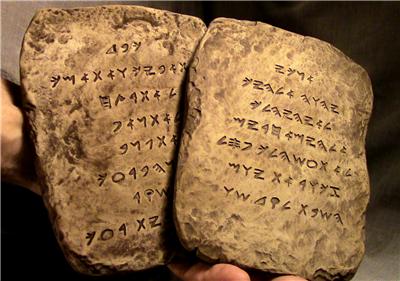
Image result for ten commandments tablets hebrewFebruary 3, 2018
Reading: Exodus 34-36; Matthew 23

Exodus 34:6–7 (CSB)
6The Lord passed in front of him and proclaimed: The Lord—the Lord is a compassionate and gracious God, slow to anger and abounding in faithful love and truth,
7maintaining faithful love to a thousand generations, forgiving iniquity, rebellion, and sin. But he will not leave the guilty unpunished, bringing the fathers’ iniquity on the children and grandchildren to the third and fourth generation.

Exodus 34 through 36 is the account of Moses meeting the Lord on the mountain after the golden calf incident, his return to the people of Israel with his face glowing, and the beginning of the construction of the tabernacle. While on the mountain, God answered Moses’ request to see His glory by passing by him. (Remember from Exodus 33 God would do this but not allow Moses to see His face.) As the Lord passed by Moses, He proclaimed His name to him and told him what He is like. God’s description helps us to see what He is like. God is full of compassion and love with a willingness to forgive sin, yet He is also just and will not leave the guilty unpunished.

Let that sink in. God is a God of compassion and a God of justice. If we are honest with ourlves, we will recognize that because of the sins in our own life (all of us have sinned), we should be recipients of God’s punishment. Yet, because of His love, He provided the sacrifice for our sins--His own Son. God maintained justice by punishing Jesus as a substitute for you and me. He maintained love by providing the sacrifice of His Son so that we can be forgiven and saved. Wow.

Matthew 23:2–3 (CSB)
2“The scribes and the Pharisees are seated in the chair of Moses.
3Therefore do whatever they tell you, and observe it. But don’t do what they do, because they don’t practice what they teach.

In this chapter, Jesus denounced the religious leaders of His day for their hypocrisy. He told the crowds and His disciples that because these leaders were teachers of the Bible, they should do what they say. However, people should not imitate what they do. This is important for us in our day because sometimes people will see hypocrisy in the lives of religious leaders and decide that not only are the hypocritical leaders faulty, but the Bible or the Savior that they claim to represent are also faulty. Here Jesus affirmed the Word of God while denouncing these teachers of the Word. Don’t let your faith in the Lord and His Word be shaken by bad messengers.

It is worth our time to look at some of the ways these religious leaders were hypocrites. Jesus said they did not follow the requirements they put on the backs of others (v4). They made a show of their religion to impress others (v5). They sought and enjoyed the honor they received from people because of their religion (v6-7). They used technical language to justify their deception of others (v16-22). They carefully gave a tithe of very minute things but did not worry about the more important matters of God’s Word—justice, mercy, and faithfulness (v23-24). They polished their image to others but never sought to change themselves personally (v25-28). They condemned those who rejected God’s Word in the past while continuing to reject the Lord and His Word in their day (v29-36).

Let us look at this list and ask ourselves whether there are any hypocrisies in us. Let us confess those hypocrisies to the Lord and forsake them. Let us be more concerned about who we are in the Lord than how we appear to others.

I am praying for you as we continue to read Scripture together. Blessings!

Mac

Friday, February 2, 2018

Thoughts on February 2 Bible Reading

February 2, 2018
Reading: Exodus 32-33; Matthew 22

I recorded a video with thoughts from today's reading. Hope it encourages you in the journey!